








In many companies, different programs operate independently of one another. Data is transcribed manually, documents are sent via email, users end up doing the same work twice, and errors quickly arise due to unintegrated systems.
Integrations enable different systems, applications, and data sources to be connected into a more efficient workflow. This helps companies save time, reduce errors, and gain better insight into their operations.
At In.Sist, we help companies integrate local and cloud-based systems, business applications, databases, web solutions, CRM, ERP, and other information systems.
Our goal is for technology to support your business, not to make it more complicated.
We set up integrations between ERP solutions (Pantheon, SAP, Navision, Datalab, etc.)
and other business systems for process automation.
We enable a seamless flow of information between the warehouse, production, and administration,
which reduces errors and speeds up processes.
Building B2B connections between ordering, logistics, CRM and online shop systems
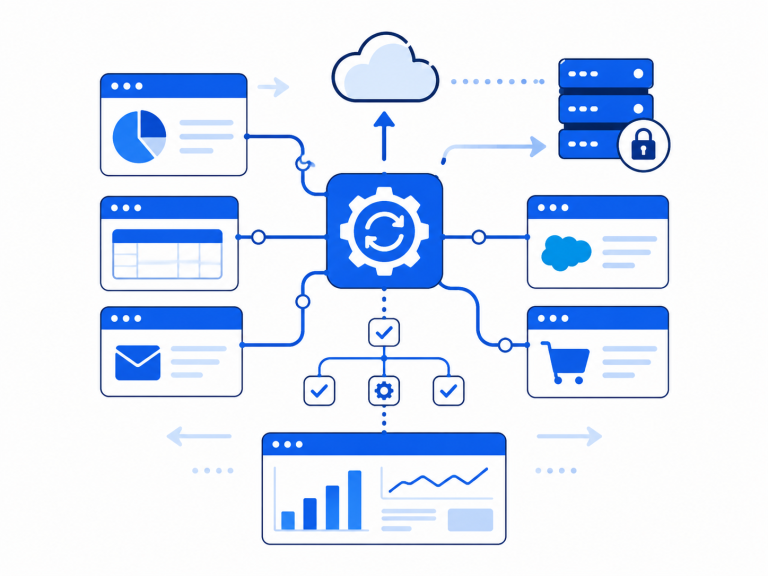
We combine on-premises servers, cloud services and SaaS applications in a secure, stable and controlled environment.
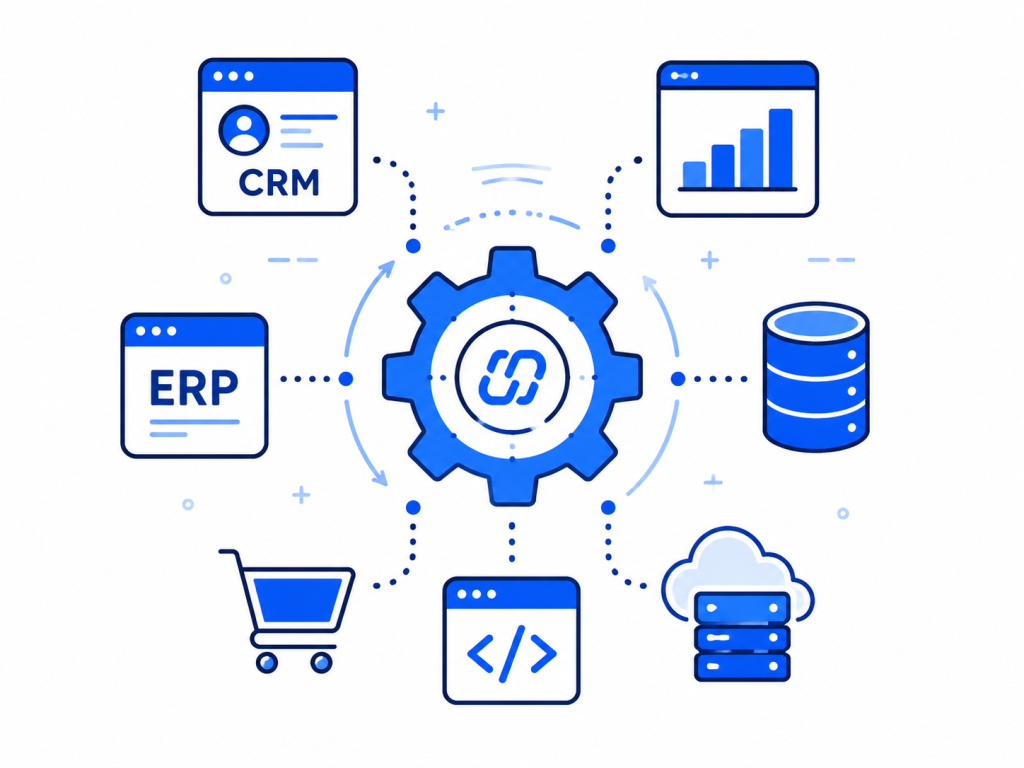
We help connect various business applications, such as ERP, CRM, accounting systems, online stores, internal portals, databases, and other tools that companies use in their day-to-day operations.
Many companies use a combination of on-premises servers and cloud services. We ensure that these systems work together seamlessly and that access to data is secure and reliable.
Manual tasks are often a source of errors and wasted time. We help automate repetitive processes such as data transfers, notifications, record synchronization, report generation, and data exchange between systems.
Where systems allow integration via APIs, we develop integrations to enable secure and controlled data exchange. This allows for more flexible application integration and better support for business processes.
We help streamline data flow between systems to ensure that information is up-to-date, consistent, and useful. This reduces the need for manual data entry and improves data quality.
Every company has its own processes. That is why we plan integrations based on users’ actual needs, existing systems, and business goals.
Disconnected systems generate hidden costs for a company. Employees spend more time on manual tasks, data is duplicated, errors are harder to detect, and management does not always have a clear overview of the information.
With integrations, you get:
Integrations are useful in a wide range of business scenarios:
Integrations are suitable for companies that use multiple information systems and want to improve their operational efficiency.
They are particularly suitable for companies that:
First, we’ll work with you to review your existing processes, applications, data, and the challenges you want to address. Then, we’ll develop an integration proposal that is practical, secure, and sustainable in the long term.
During implementation, we handle testing, security, documentation, and user support. It is important to us that the integration is not only technically sound, but that it actually makes work easier in practice.
At In.Sist, we understand both the technical and business aspects of integration. We don’t connect systems just for the sake of connecting them, but to help companies achieve better processes, fewer errors, and greater efficiency.
If you feel that your systems aren’t working together well enough, we can help you find a better solution.
Contact us, and together we’ll determine which integrations would bring the most value to your business.
(+386) 59 / 072 – 825
info@in-sist.si